Empathy Interviews

"Customers do not know what they want" - This is a myth! I believe most of our customers are aware what might add value to their product. Where they fail is to articulate their wants and map them to their latent needs. 

A typical question and answer format based contextual interview may not be the most suitable way to gauge a customers latent needs. So here we introduce "Empathy Interviews"

How is an Empathy Interview different than a traditional Q&A based Contextual Inquiry?

Empathy interviewing focuses on the emotional and subconscious aspect of an audience’s actions by revealing why they behave a certain way. The role of the moderator is to understand the bigger motives behind a certain customer action.

Example: 

Interview question: “Recall your last online shopping experience. What did you think or feel throughout the process?

In a traditional contextual inquiry interview, the moderator would rightly focus on the needs and pain points in the online shopping process. Things he might look out for - how much time it took for completion, was it a success or a failure, what were the ah ha! moments, what were the roadblocks. 

A layer missing in the above approach is the latent need of shopping. What motivates a customer to shop? Why did he choose this site? 

An empathy interview combined with a traditional Q&A will deliver stronger insights that are backed up with real motivations of the user.

So, reframing the above question

"Recall your last "shopping" experience. Who did you shop for? What were some delightful moments while you shopped?"

The above question may not directly be linked to online shopping, however it could give us an higher level of understanding about what matters to people when they shop. 

As moderators, we could always layer the questions by digging deeper into the online shopping experience as a follow on question. However, with empathy interviews we get an opportunity to understand the higher level motives of our customers.

In a nutshell, 

The idea is to get subjects to speak from the heart and talk about what’s really important to them, rather than what fits into the interviewer’s agenda. The process mimics a regular conversation, which helps ease tensions and encourages participants to relax and start telling stories.
Tell a story for better UX

As a kid, I was always fascinated by the art of telling stories. I fondly remember my class teacher who taught us topics like Indian Civilization, World War, Indian History and made me fall in love with the subject I hated the most.

Did she have a magical spell? Oh yes, she did… She was good at telling stories… She grabbed my attention by bringing life into the textbook characters.

Stories have defined our world. They have been with us since the dawn of communication, from cave walls to the tall tales recounted around fires. They have continued to evolve with their purpose remaining the same; to entertain, to share common experiences, to teach, and to pass on traditions.

What does story telling have to do with UX?

I have been practicing the language of story all through my journey as a designer and in this post I shall share my views and experiences using this mechanism in varied UX fields like research, conceptualization and identifying opportunities.

Story telling has a very evident role to play in various stages of UX Design.

The Research Phase

Use stories to narrate user behaviors

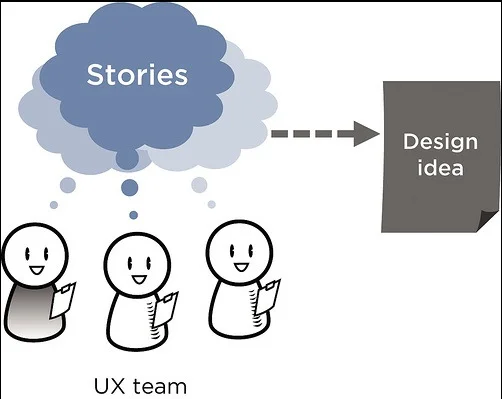
When you tell a story, you transform what you heard during research into data and information that your team can use to imagine opportunities and solutions.

One team member’s specific, descriptive and timely story can become shared knowledge and provide inspiration to the whole team. Because stories are accounts of real people, real situations and specific events (not general statements or summaries) they provide concrete details that help you address particular problems.

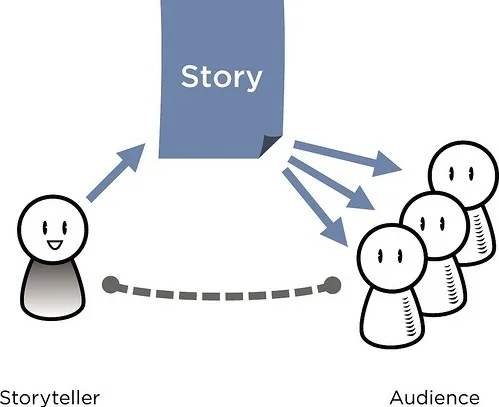
You could gather a team of designers and stakeholders in a room with white walls and post its. One team member starts with narrating the day in a life of a user he just interviewed. Others could gather observations, ideas and notes based on their individual interpretations of the story just told.

story.jpg


Book:Storytelling for User Experience , by Whitney Quesenbery & Kevin Brooks

The Conceptualization Phase

Use stories to identify opportunities

A story could be interpreted differently by different audiences. When you narrate a story to a team or a large group of audience, every person has his/her own perspective and idea of the story. This opens ways for different insights and opportunities for design.

For example, while narrating a story of a job seeker and his usage of a career portal it was observed that each participant / audience perceived the problem in a unique manner. The participant who was of nearly the same age as the persona could relate to the real life scenario in a much better manner and identified that lack of communication using technology was an area that needed to be further investigated whereas another group of participants felt that the persona was not bold enough to explore different channels to seek jobs. Hence he needed something simpler as job alerts via SMS.

The best way to use stories for conceptualization is to jot down the story points in any favorable application and categorize the story points as “User Statement”, “Observation”, “Problem” and “Insight”.

Problems and Insights help you get closer to opportunities and Design Ideas

I use an excel spreadsheet to do this.

Book:Storytelling for User Experience , by Whitney Quesenbery & Kevin Brooks

The Implementation Phase

Use stories to communicate how design fits in the real world

The word implementation here means implementing your ideas and thoughts and making them concrete using prototypes and screen flows. It means giving a thought to screen navigations and creating working prototypes based on the research and conceptualization phase.

A story board could be an effective mechanism to communicate and relate the use of the designs and application in the life and context of the user. Using a story could help the product managers and stakeholders to effectively identify the areas where the proposed design could make a difference in the life of a user.

Indigo Studio is a very good tool to create storyboards.

story2.jpg

Indigo Studio Storyboard example

Conclusion

It’s a good idea to incorporate the story centered design approach as UX designers. My experience has been rewarding and some key benefits are surely speeding communication, clarifying design goals, and collaboratively builds team design thinking.

Happy story telling!!

UX SG Meet up – 11 March 2015

As a designer, I believe its very important to keep myself updated with not only what’s new in the design technology but also with who are the players and fellow designers in your community. There is a reason I like to follow people in a community-

1. Network – Network – Network – Create you own cult :)

2. You can get some expert advice on a topic you are unaware of. You know who to call or ask for suggestions

3. Helps you categorise yourself in a particular group – Dreamers, Innovators, Institutionalist’s, Critics

4. Crowd sourced learning – Fill your knowledge gaps

So here I was at UXSG meetup with all the above intentions in mind.

A quick snapshot of my experience

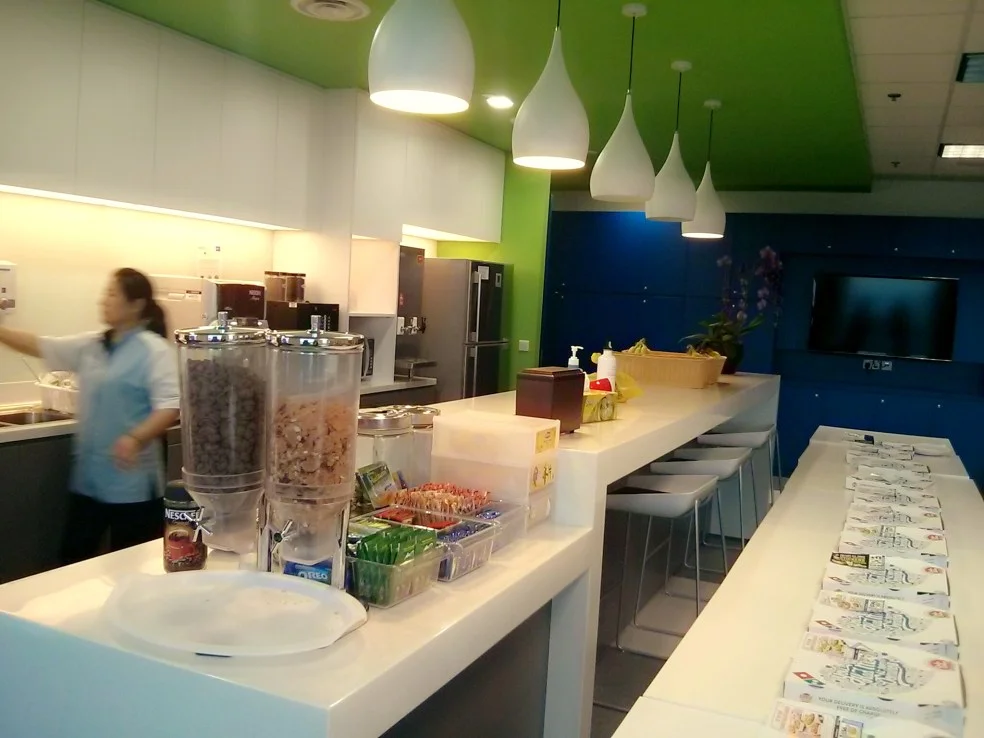
1. The event was hosted at PayPal Singapore office ( Food and drinks! They have a free flowing vending machine – I loaded myself with ice teas every now and then)

blog31.jpg


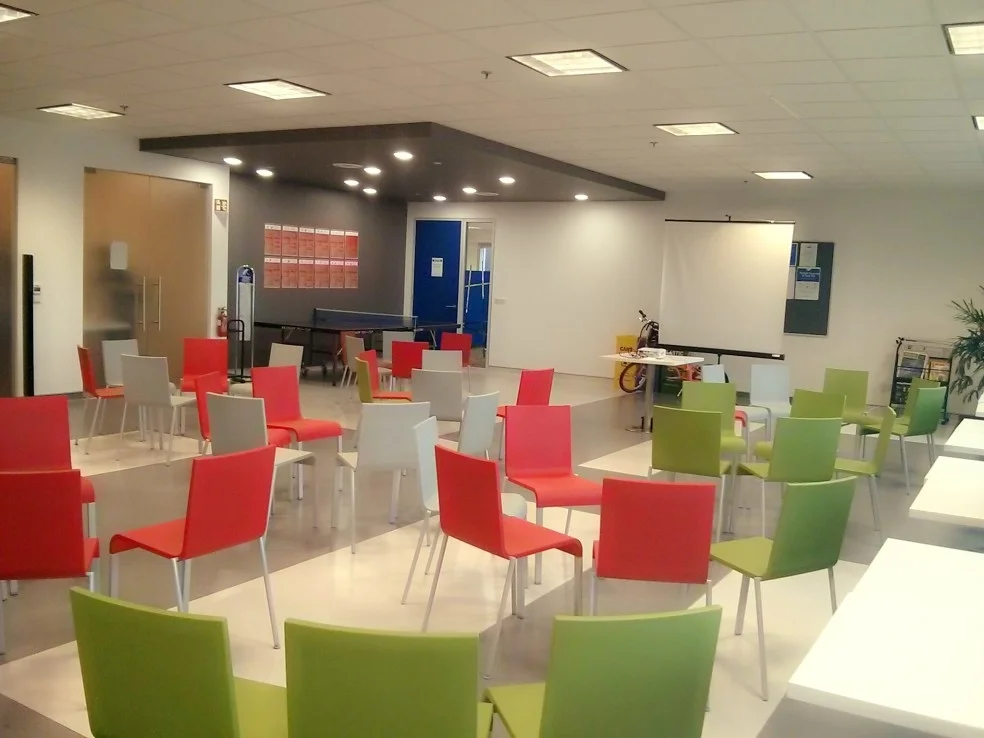
2. Excellent organizers – Well planned logistics

blog32.jpg


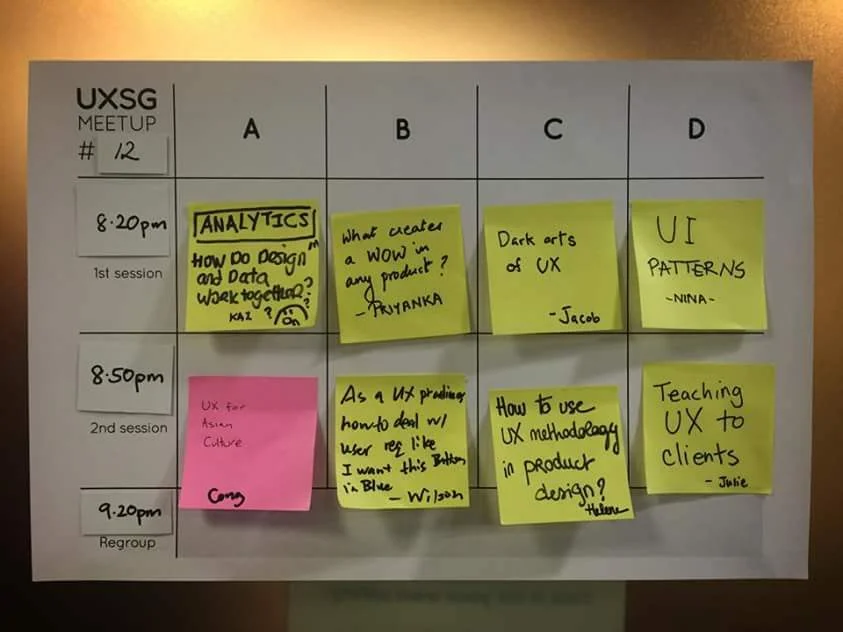
3. Open Space topics – Participants could suggest design topics, something they wanted to learn from the community and get inspired

blog33.jpg


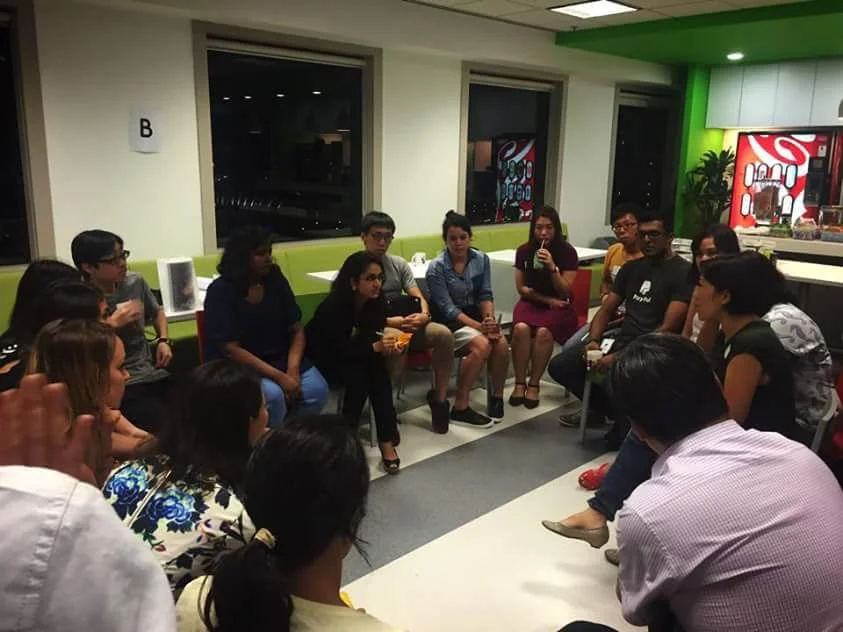
4. Discussions and Brainstorming – Interactive discussions around the suggested topics. Lots of insights, ideas, thought provoking statements, design thinking finally led to a great learning

blog34.jpg


My takeaways from this experience

– I met a lot of new people, knowing the kind of work they do was quite interesting

– Learnt about design challenges in a practical industrial scenario and how to tackle them

– Answered a big question ” What defines WOW in a product”

– Lot of thought provoking ideas on “Rationalising design to clients”

– Loved my ice tea

– Eagerly waiting for the next one. Till then ciyo :)

User Mental Models

Mental Model example by Indi Young

As designers, we deal with a lot of research and ethnographic data. Data collected during interviews, contextual inquiries, brainstorming, secondary research etc. I have always believed that synthesizing the collected data in the right manner, after interviews is the key responsibility of a user experience designer. Till date the “Affinity Diagrams” have been my best friends to organize and structure the data. They have helped me gain insights with respect to the task flows, user goals and also find relationships between ideas.

I recently stumbled upon an article by Indi Young (one of the founders of Adaptive Path) where she describes the concept of  “MENTAL MODELS” to affinitize the collected data based on four primary attributes : behavior, motivation, philosophy, and emotion.

Young says , “Mental models give you a deep understanding of people’s motivations and thought-processes, along with the emotional and philosophical landscape in which they are operating.Mental models are simply affinity diagrams of behaviors made from ethnographic data gathered from audience representatives.”

I found this methodology refreshing and effective as it goes beyond tasks and goals. It allows designers to user the power of empathy to design products / interfaces that take into consideration the human emotions.

Indi Young and Brad Colbow have a unique and fun way to help people understand what they mean by mental models.In this comic, Indi and Brad introduce mental model diagrams to us and how we can use them to build better websites.

Hope you enjoy this comic as much as I did !

blog41.jpg